Korallenriffe im Indischen Ozean: Wie Satellitendaten und Genomik den Schutz unterstützen
Tropische Korallenriffe sind Hotspots der Biodiversität, doch regelmässig auftretende starke Hitzewellen bedrohen sie massiv. Eine aktuelle Studie kombinierte Satellitenbeobachtungen der Meeresbedingungen mit Genomanalysen von Korallen im westlichen Indischen Ozean. So gelang es, Riffe mit hitzetoleranten Korallen zu identifizieren und die Ausbreitung ihrer Larven über mehr als 1.000 Kilometer hinweg mithilfe der Meeresströmungen zu dokumentieren.
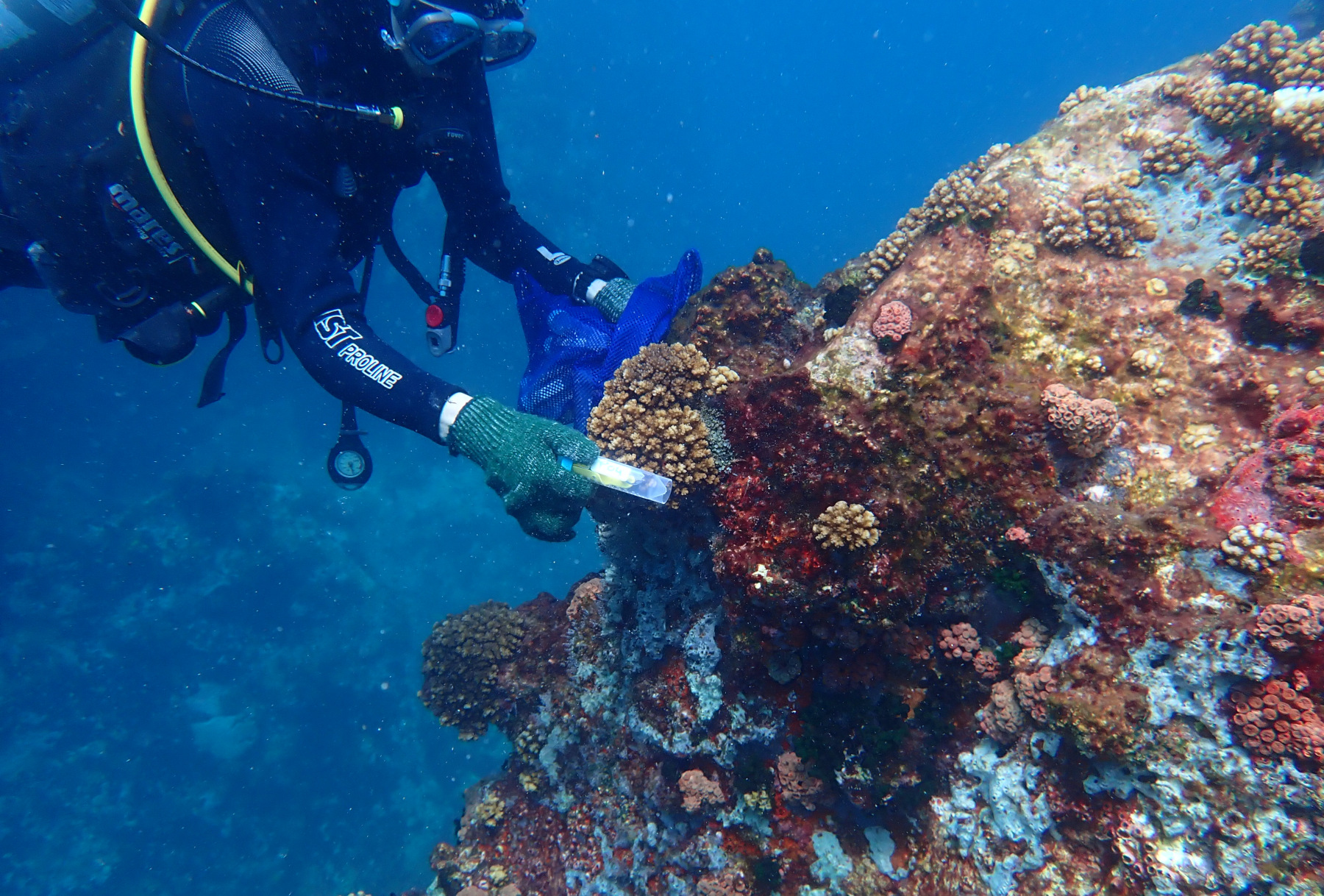
Die vom UN-Entwicklungsprogramm koordinierte Studie entstand durch Zusammenarbeit von Forschenden aus der Schweiz, Frankreich, Mauritius, Rodrigues und den Seychellen. Ihre Ergebnisse wurden kürzlich in Evolutionary Applications veröffentlicht und fliessen jetzt in Strategien für gezielte Schutz- und Wiederherstellungsmassnahmen für geschädigte Riffe ein.
Biodiversitäts-Hotspots in Gefahr
Korallenriffe zählen zu den artenreichsten Ökosystemen der Erde. Sie beherbergen bis zu einem Drittel aller Meeresarten und sind für Küstengemeinden lebenswichtig – etwa als Fischgründe oder Küstenschutz. Doch durch den Klimawandel und immer häufigere Hitzewellen sind sie stark bedroht: Zwischen 2009 und 2018 ging die weltweite Korallenbedeckung um etwa 14 % zurück, vor allem durch Korallenbleiche, die oft zum Absterben der Riffe führt.

Auf der Suche nach hitzeangepassten Korallen
Doch nicht alle Korallen reagieren gleich empfindlich auf Hitze. Einige Riffe im westlichen Indischen Ozean – etwa um Mauritius, Rodrigues und die Seychellen – beherbergen Korallen, die sich an wiederkehrende Hitzewellen angepasst haben. In einer internationalen Zusammenarbeit haben wir diese hitzetoleranten Korallen identifiziert, indem wir Satellitendaten mit Genomanalysen verknüpften.
In einem ersten Schritt, rekonstruierten wir mithilfe von Satellitenbeobachtungen die Meeresbedingungen und Klimaverläufe jedes Riffs in der Region über die letzten Jahrzehnte. Auf der Grundlage dieser Klassifizierung führten wir eine Unterwasser-Feldkampagne durch und sammelten Korallen-DNA-Proben von Riffen mit unterschiedlicher thermischer Vorgeschichte. Anschliessend analysierten wir die Genome dieser Populationen, um genetische Merkmale zu identifizieren, die mit der Wärmeanpassung zusammenhängen. So konnten wir nicht nur Riffe mit hitzetoleranten Korallen ausmachen, sondern auch deren natürliche Ausbreitung der Larven über mehr als 1.000 Kilometer offenes Meer nachverfolgen.
Anschliessend nutzten wir Erdbeobachtungsdaten, um die Strömungsmuster an der Meeresoberfläche in der Region zu modellieren. Da sich Korallenlarven passiv über diese Strömungen ausbreiten, konnten wir ermitteln, welche Riffe kaum natürlichen Nachschub an hitzeangepassten Larven erhalten.

Zusammenarbeit über mehr als 1000 km offenes Meer
Diese Forschung ist das Ergebnis einer Zusammenarbeit, die vom Entwicklungsprogramm der Vereinten Nationen in Mauritius koordiniert und von einem Beratungsteam aus der Schweiz (Oliver Selmoni von der UZH, Annie Guillaume und Stéphane Joost von der EPFL) und Frankreich (Véronique Berteaux-Lecellier vom CNRS und Gaël Lecellier von der Universität Neukaledonien) geleitet wurde.
Das Beratungsteam arbeitete mit lokalen Meeresforschungszentren, darunter das Mauritius Oceanographic Institute, sowie mit NGOs zusammen, die sich für den Schutz der Korallenriffe auf Mauritius, Rodrigues und den Seychellen einsetzen.
Gemeinsam bewerteten die Projektpartner den Zustand der Riffe, entwarfen eine Strategie für die Probenahme, führten Feldarbeiten durch und werteten Proben aus. Während des gesamten Projekts boten die Berater:innen Schulungen zu Feldprobenahmen, Labortechniken und computergestützten Analysen an – unter Verwendung von Erdbeobachtungsdaten zur Charakterisierung des Meeresklimas und zur Verknüpfung genomischer Daten mit Klimaschwankungen.
Die Ergebnisse wurden im Juni 2024 auf einem Symposium in Mauritius vorgestellt, auf dem Interessengruppen aus der gesamten Region Schutzstrategien diskutierten. In Mauritius werden die Ergebnisse in die Einrichtung einer landgestützten Korallenzuchtstation einfliessen, deren Schwerpunkt auf der Vermehrung hitzetoleranter Korallen liegt, um künftige Wiederherstellungsbemühungen zu unterstützen. Diese Strategien können jedoch nicht das gesamte Riffsystem vor den extremen Hitzewellen schützen, die nach aktuellen Emissionsszenarien prognostiziert werden. Das langfristige Überleben gesunder Korallenriffe hängt von einer drastischen Reduzierung der CO₂-Emissionen ab.
Literatur
Guillaume, A. S., Joost, S., Curpen, S., Dumur Neelayya, D., Harree-Somah, L., Sadasing, O., Saponari, L., Dale, C., Barret, L., Andrews, N., Leckraz, S. K., François, R., Seetapah, V., Munusami, V., Bacha Gian, S., Jhangeer-Khan, R., Mahoune, T., Chumun, P. K., Poretti, M., Berteaux-Lecellier, V., Lecellier, G., Selmoni, O. (2026). Coral genetic structure in the Western Indian Ocean mirrors ocean circulation and thermal stress history. Evolutionary Applications, 19(2), e70206. https://doi.org/10.1111/eva.70206
Titelbild: Probenahme von Korallen für DNA-Analysen auf den Seychellen (Bild: Véronique Berteaux-Lecellier)