The hidden geography of climate news: media reporting correlates with wealth more than disaster events
Climate change and its impacts are global pressing issues, but not all climate disasters receive equal attention in the media. A recent study systematically analyzes reporting by British newspapers since 2000, revealing pronounced geographic biases in coverage. The findings raise important questions about the media’s role in shaping public awareness and the implications for global climate justice.
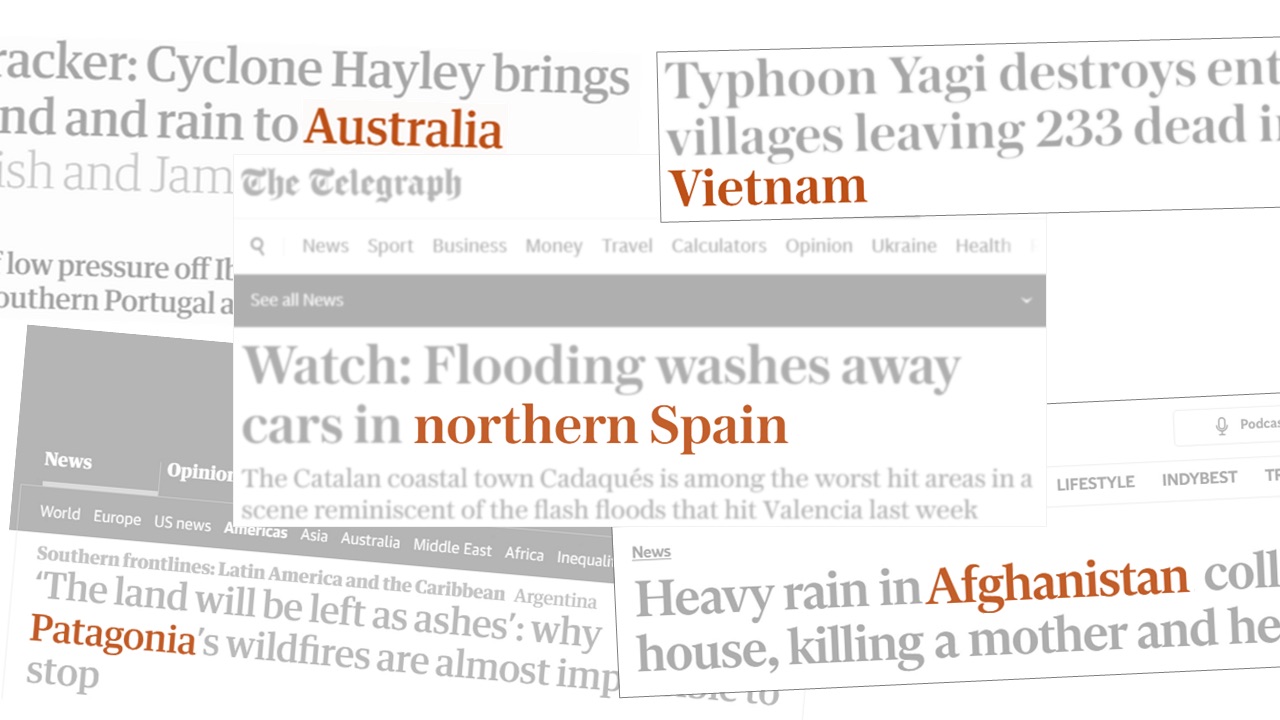
Inhye Kong and Ross S. Purves analyzed reports on climate-related disasters from five leading British newspapers—The Daily Telegraph, Financial Times, The Guardian, The Independent, and The Times—covering the period from 2000 to 2023. By extracting and geolocating place names mentioned in these reports using Irchel Geoparser, they mapped media attention at the country level. Their analysis revealed a pronounced geographical imbalance in coverage. These findings were recently published in the Annals of the American Association of Geographers.
Disproportionate focus on the Global North
Climate disasters in Europe and North America receive disproportionate media attention, whereas those in the Global South—where climate impacts are often most acute—remain systematically underreported.

Economic ties over disaster frequency
Media coverage is more strongly influenced by a country’s wealth and its trade volume with the UK than by the actual occurrence or disaster events. Economic and political connections, rather than humanitarian need, thus shape what becomes news.
Coarse and distant framing
British newspapers tend to use broad administrative toponyms (e.g., states, capitals) when reporting on disasters abroad. In contrast, finer-grained geographic references are largely reserved for events in Europe and North America, reflecting a spatial bias in media framing.
Media as gatekeepers of public perception
The media plays a pivotal role in shaping public attention and policy priorities. When coverage favours wealthier, more politically connected countries, it distorts public understanding of where climate impacts are most severe, skews policy responses, and perpetuates global inequities.
Literature
Kong, I., & Purves, R. S. (2026). Analyzing Geographic Bias of Newspaper Articles Reporting Global Climate Disasters. Annals of the American Association of Geographers, 116(2), 270–288. doi.org/10.1080/24694452.2025.2564220