Spotlight: Sustainability Potential of Outdoor Light Technology
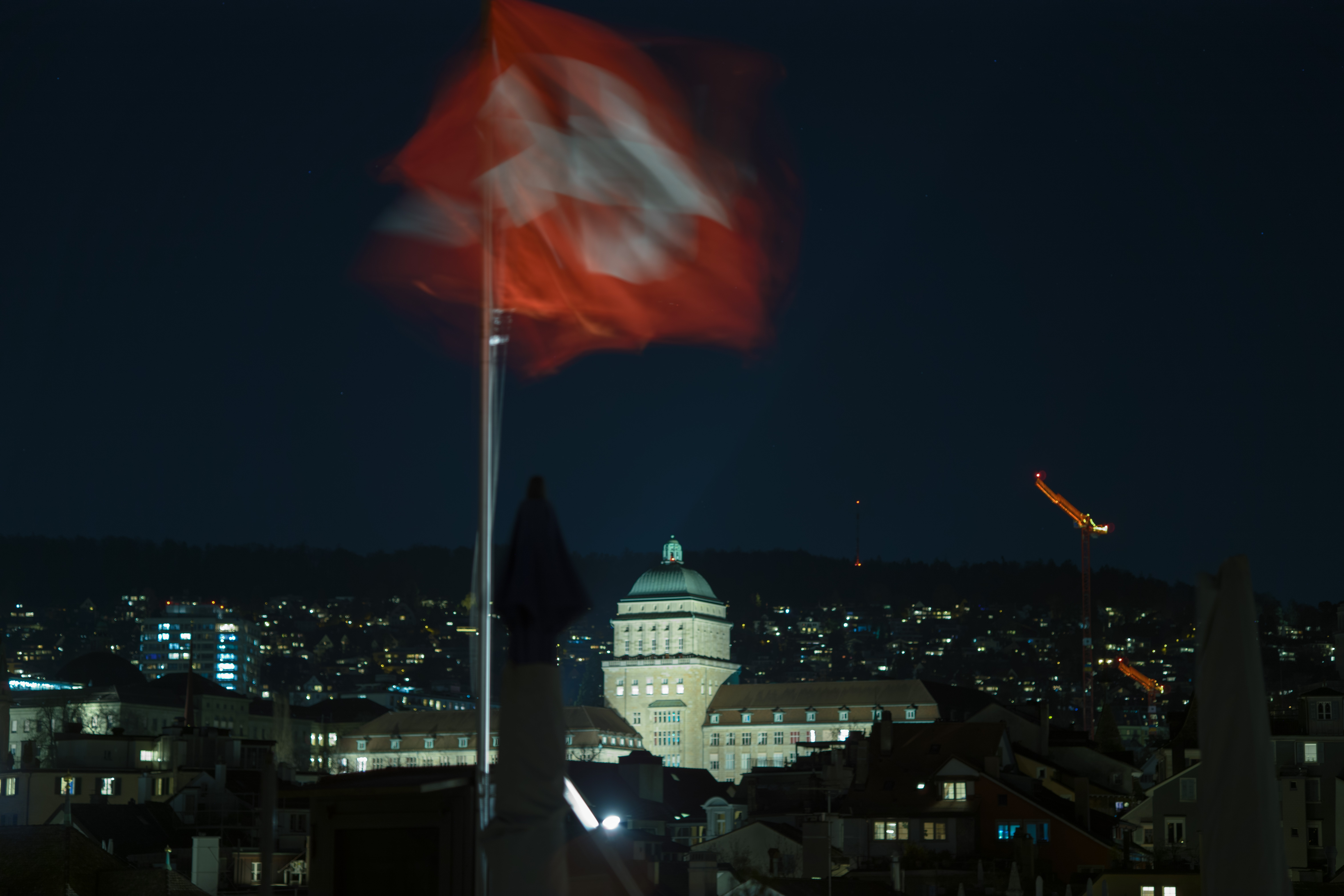


Public illumination has emerged as a key networked infrastructure for over a century, expanding alongside the growth and densification of urban fabric of cities. The Swiss Bundesamt für Umwelt (BAFU) estimates that light emissions in Switzerland have doubled in the past 25 years. Concerns over energy consumption and the detrimental impacts of outdoor lighting—on astronomical observation, terrestrial and marine ecosystems, human health, and the quality of public spaces—have made it a pressing political issue in recent years.
The interdisciplinary SNF Sinergia project SPOTLIGHT (Sustainability Potential of Outdoor Light Technology) investigates how outdoor lighting infrastructure can be made more socio-ecologically sustainable. Through socio-historical and evidence-based social and experimental research, the project aims to update and optimize current lighting practices and standards.
The Human Geography component of SPOTLIGHT examines historical and ongoing socio-technological changes in nocturnal public lighting in Switzerland, with a focus on the Zurich metropolitan area. Key research questions include:
- How do lighting experts assess the current lighting situation in Switzerland and what future needs and challenges do they identify?
-
How does the general public perceive existing lighting infrastructure in different settings and which lighting practices do they find acceptable?
-
What are the perceived pros and cons of experimental exposure to different outdoor lighting conditions and how do socio-cultural backgrounds influence lighting perceptions and preferences?
Qualitative approaches
To address these questions, the project employs a transdisciplinary reserarch methodology comprising of documentary and archival research, walking interviews with experts, nocturnal workers, and residents to explore experiences of nighttime lighting and its socio-technical transformations, cartographic analysis of Zurich’s nightscape, as well as participant observation of Zurich’s nocturnal life.
Quantitative approaches(experiment)
The aim of our light situation experiment is to find out how people (in Irchelpark) perceive and react to different lighting conditions. The study will also investigate any overlaps between human perception and the reactions of insects.
From 17 November to 17 December 2026 and during the second week of February 2027, various night-time lighting scenarios will be tested along the promenade in Irchelpark (between Milchbuck and Allmendsee). The experiment will take place from 17:15 to 19:15 on Tuesdays to Thursdays. The lighting scenarios, which will change daily, will be visible and perceptible between dusk and dawn. On the other days of the week, the regular lighting will be in operation.
The project is being carried out in collaboration with the UZH Irchel Facilities Service and the Zurich Cantonal Electricity Works (EKZ). The legally prescribed minimum lighting levels will be maintained at all times. The project has been approved by the UZH Ethics Committee (Faculty of Arts), the Irchel Facilities Service and UZH Campus Culture.
For the experiment, the EKZ will replace a total of 15 light sources on the lampposts along the Irchelpark promenade with controllable and adjustable light sources in October 2026. At the end of February 2027, these will be removed, the original light sources reinstalled, and the usual lighting regime restored.
Weatherproof information posters will be displayed at the first and last lampposts to provide details about the project and encourage passers-by to take part in the survey. The survey will ask, amongst other things, for impressions regarding atmosphere, sense of safety, aesthetics, energy consumption and environmental sustainability.
On the days designated for the experiment, members of the research team will be present on the promenade (between 17:15 and 19:15) and will be available to provide information. In addition, counts will be carried out and surveys conducted with passers-by during this time.
Surveys are conducted with three groups: passers-by who will use a QR-code (from the information posters), passers-by who will be surveyed by student assistants and a group of volunteers (that are working or studying at Irchel campus) who fill in a survey for each lighting situation.
Spotlight Human Geography project team
Norman Backhaus
Nitin Bathla
Sophia Heller
Learn more about the Sinergia SPOTLIGHT project
Outputs
-
Bathla, N., Heller, S., & Backhaus, N. (2026). Nocturnal rewilding on a Luminous Planet: The politics of urban illumination as infrastructure ecology. Urban Political Ecology, 0(0). https://doi.org/10.1177/30497515261483525
-
Bathla, N., & Backhaus, N. (2026). Uneven illumination: Light masterplanning and the infrastructural politics of neoliberal urbanisation in Zurich. Environment and Planning D: Society and Space, 0(0). https://doi.org/10.1177/02637758261429302
-
Uneven illumination and the infrastructure politics of light masterplanning, 2026, Nitin Bathla, Norman Backhaus, Sophia Heller. GIUZ Blog, https://blog.geo.uzh.ch/infrastructure-politics-of-light/
-
Lichtverschmutzung: weniger Licht und gerechter verteilt, 2026, Nitin Bathla. Staffel 2: Natur um die Stadt herum, Nature and the City, https://natureandthecity.ch/podcast/lichtverschmutzung-zuerich/
-
Eine politisch-ökologische Perspektive auf Lichtlandschaften. 2025, Nitin Bathla, Norman Backhaus, HOTSPOT 52/25. https://biodiversity.scnat.ch/publications/hotspot/hotspot_52_25/eine_politisch_kologische_perspektive_auf_lichtlandschaften
-
Cities of Lights. 2025, Nitin Bathla. Desired Landscapes - 08. https://desired-landscapes.com/products/issue-08