Supporting Mangrove Restoration
Mangrove forests protect coastlines from storm surges and provide habitats for wildlife. But the same coastal land also supports local livelihoods through aquaculture, which creates tensions between conservation and economic interests. Our colleague Leon Hauser is currently discussing with partners in Vietnam how these conflicting interests can be reconciled.
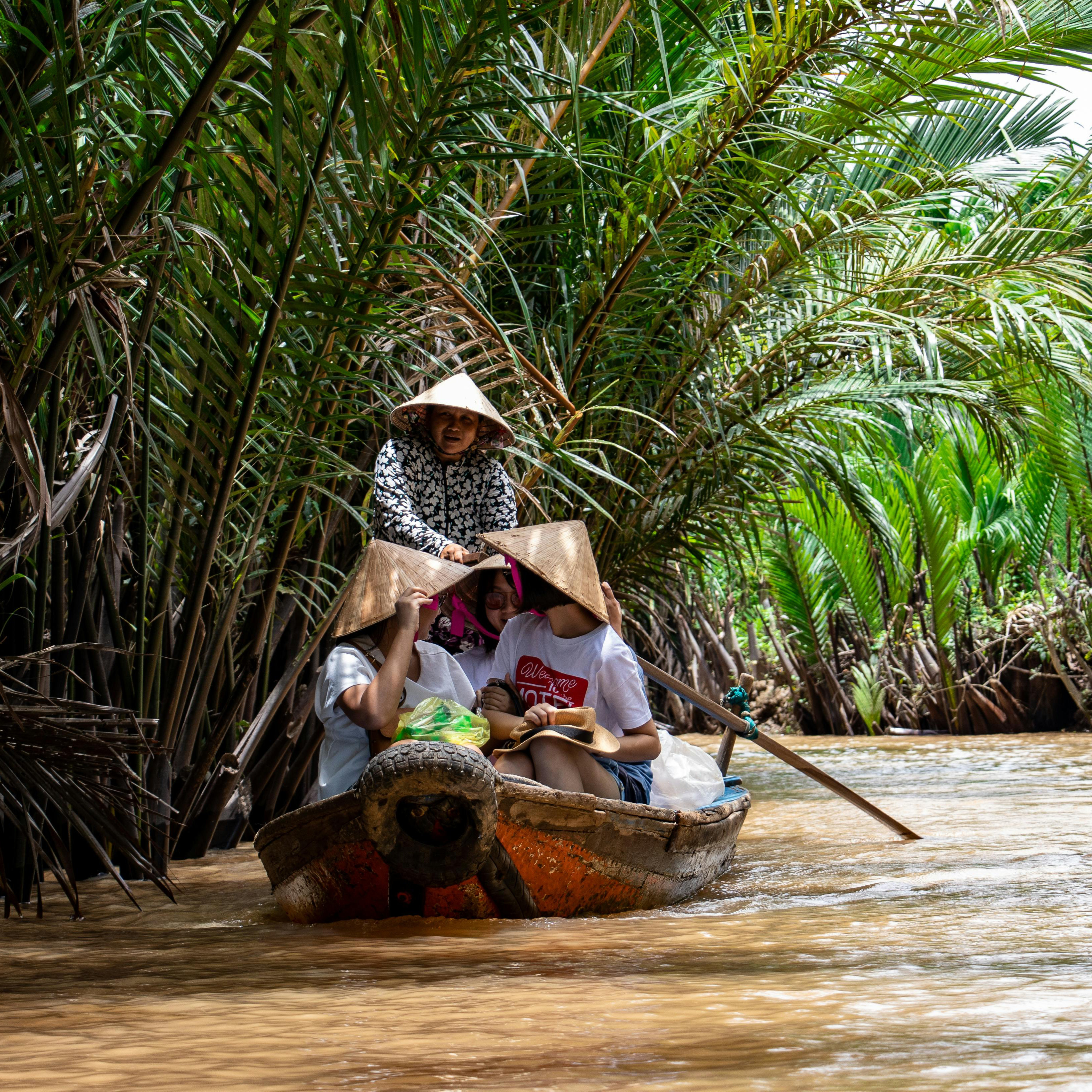
In the Mekong Delta, large stretches of coastal land are used for shrimp farming, an important source of income for local communities. To reduce pressure on mangrove forests, alternative sources of income are being explored, such as selling mangrove seedlings and new concepts for tourism.
Combining scientific data with local knowledge
Local initiatives are also working to restore degraded areas. One of their challenges is identifying coastal sites where newly planted mangroves can survive in the long term. Their survival depends on various factors such as water availability and salinity, as well as how coastlines may change in the coming years due to rising sea levels.
To support these efforts, Leon Hauser is working with Vietnamese researchers and local initiatives on a project called Mangrove Horizons. Together, they want to combine remote sensing data, ecological and hydrological information, and local knowledge to identify suitable restoration sites and determine which mangrove species are most fit to survive in these areas.
Symposium in Vietnam
To kick off the project, Leon Hauser and his partners have organised a symposium and field lab in Vietnam. Starting in Ho Chi Minh City, researchers, local initiatives and representatives from government, tourism and the financial sector will travel to the Mekong Delta to discuss approaches to mangrove conservation.
Leon hopes the event will lay the groundwork for a lasting research network in Vietnam. “Scientific research is largely concentrated at universities in wealthy countries that have the necessary resources,” he explains. “If I can help support research in the countries where mangroves actually grow, then that's something I want to do.”