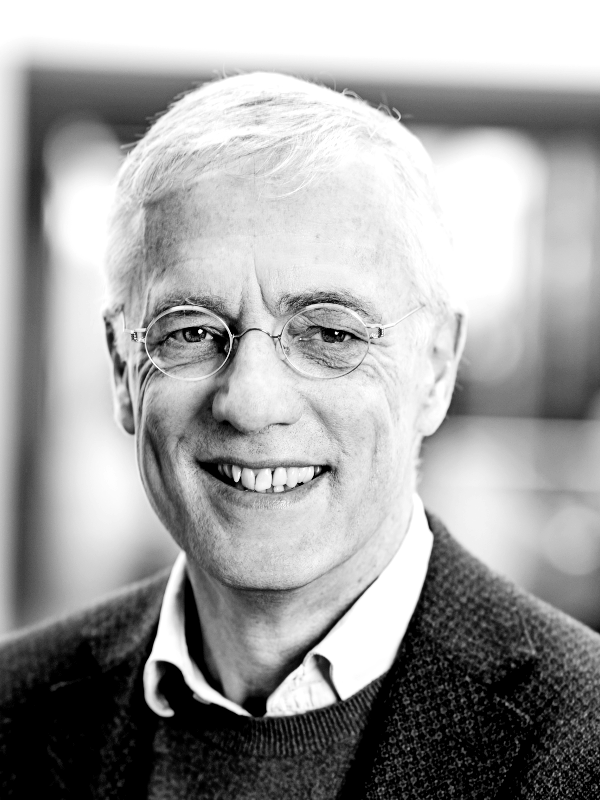
Huib Ernste, Prof. em. Dr
- Affiliated Researcher
Header
Prof. em. Dr Huib Ernste studies the relationship between human activities and their spatial context, and the role spatial differentiation plays in society. His more specific fields of interest include:
Theoretically:
Methodologically:
Research Methods, both Quantitative (Statistics) as well as Qualitative
Focus:
Prof. Huib Ernste is a critical geographer, focussing his research on topical societal problems and how we can create a better, more inclusive and sustainable futures, in fields such as mobility, migration, urban development, governance, sustainable action, cultural identity, encounters and exchange, violent conflicts, politics, borders, the role of art and other forms of expression in public space.
Available for Supervision of Master's Theses:
What is the ‘Vibe’ of Places?
Successful urban places are not just functionally well-suited, but often also aesthetically appealing; they radiate a certain energy and stimulate or give direction to a specific use of that place. The affective and emotional ‘feeling’ of urban places is therefore central to their quality.
This Vibe can be explored in creative or innovative places, welcoming places, places of encounter and integration, event locations, places of relaxation or contemplation, sacred places, leisure places, touristic places, places for consumption, for nightlife, for learning, for feeling at home, places of mobility, ‘alternative places’, powerful places, healthy places, inspiring places, unsafe or criminal places, exciting or threatening places, etc..
They all breathe a certain (positive or negative) Vibe, and provide an embodied feeling. The ‘feeling’ of a place can be very powerful. Its effect can be greater than that of other, more functional aspects of urban spaces. Often, it is THE driving force behind the success or failure of urban places. The scientific concept used in the literature for what we describe here as the Vibe of a place is ‘Atmosphere’. A concept central to current neo-phenomenological approaches in human geography.
The affective and emotional Vibe of an urban place can be investigated with multi-sensorial qualitative methods and phenomenological interviewing, but these methods can also be combined with more behavioural approaches, such as mental mapping, or methods based on eye-tracking, automated face-recognition, electrodermal activity sensors, etc.
For further details see PDF (PDF, 631 KB).
Interested? Let us have a coffee and a chat on the topic: huib.ernste@ru.nl +41 76 70 94 481