Mobility-aware Geoservices
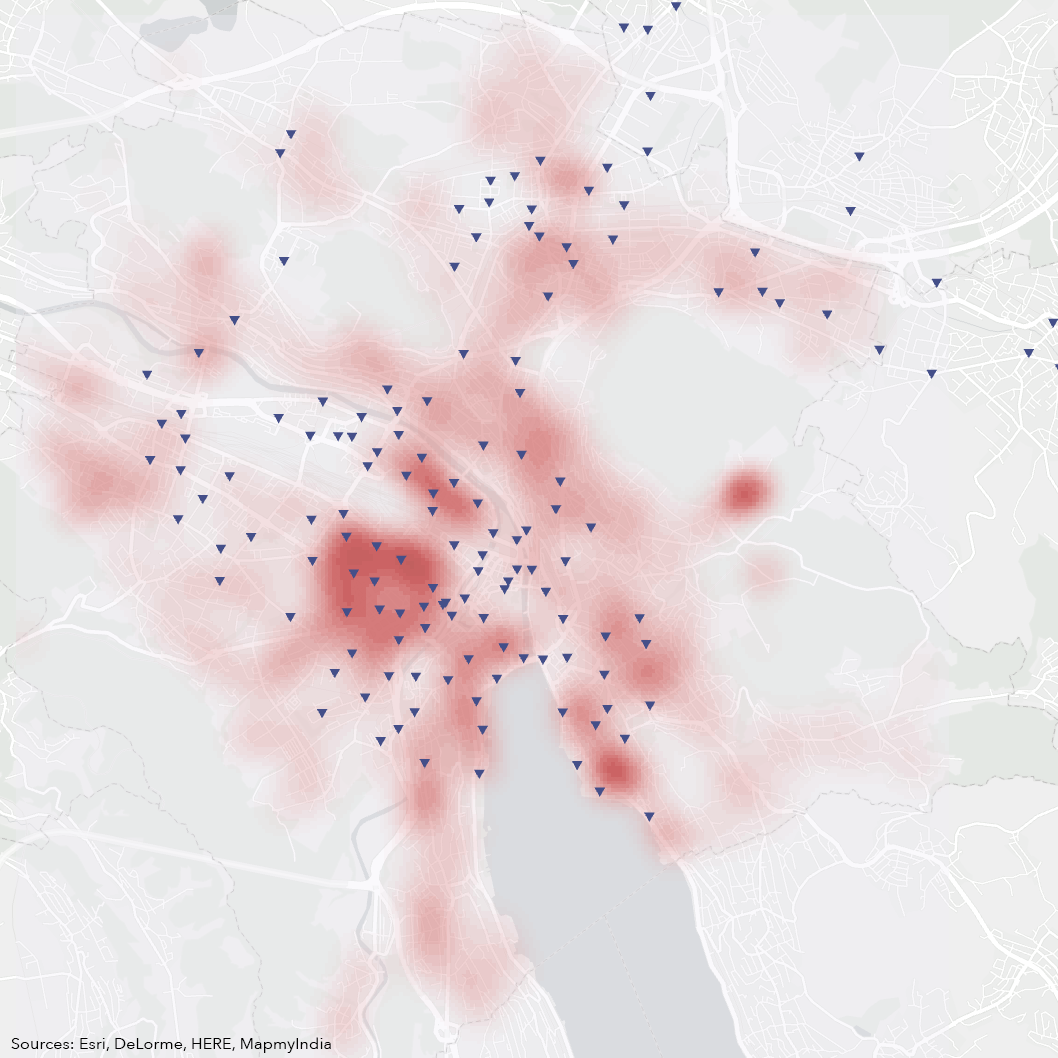
Our group analyses human behaviour in hybrid geographic and digital space in the context of digital and immersive transformation. We study when, where, and how people move through, perceive, and interact with phygital environments — spaces where physical and digital geography merge through mobile map apps, geographic information displays, and extended reality (XR) technologies in smart, sensor-, and data-driven cities. We aim to guide the attention of mobile and digital citizens toward relevant geographic information for affective, effective, and efficient decision-making and space-time behaviour in everyday activities, across both physical and virtual layers of experience.
With our research, we intend to support the intelligent mobility of users with different backgrounds, needs, and abilities, building on smart digital infrastructures and emerging immersive technologies. As our focus shifts toward Extended Reality, phygital geography, and hybrid spatial experience, we investigate how augmented, virtual, and mixed reality reshape spatial cognition, navigation, and everyday mobility in increasingly blended environments. To address our research questions in this interdisciplinary field, we employ, among others, methods from quantitative geography, geovisualisation, XR/immersive technologies, AI (machine learning, predictive analytics, ambient intelligence), and HCI. We conduct field studies, ambulatory assessments, ecological momentary assessments, and immersive (CAVE/VR/AR) experiments to gain ecologically valid insights about the usage, utility, usability, effectivity, and efficiency of mobile maps and phygital spatial interfaces.
Further information
Group leader
Group members
Alexandru Tufis-Schwartz